

Recurring Meaning: Definition, Uses & Examples Explained
You’ve probably seen the word “recurring” on a bank statement, in a subscription confirmation email, or maybe in a conversation about a dream that just won’t stop coming back. It feels like a word you already understand — until someone asks you to explain the exact difference between “recurring” and “reoccurring,” and suddenly it’s not so simple.
“Recurring” is one of those everyday words that shows up across very different contexts — finance, health, entertainment, math, and casual conversation — and its meaning shifts just slightly depending on where you see it. This guide breaks down exactly what recurring means, where the word comes from, how to use it correctly, and how it compares to similar terms people often confuse it with.
Recurring Meaning: Quick Definition
Recurring (adjective/verb): happening again, repeatedly, often at regular or predictable intervals, rather than as a one-time event.
In simple terms, if something is recurring, it keeps coming back — not just once, but as an ongoing pattern. That pattern can apply to:
- A payment that charges automatically every month
- A dream that repeats itself over time
- A health issue that flares up again and again
- A character who reappears throughout a TV series
- A number pattern that repeats infinitely in mathematics
Here’s the definition broken down for quick reference:
| Element | Detail |
|---|---|
| Part of speech | Adjective, present participle (verb form) |
| Base verb | Recur |
| Pronunciation | ri-KUR-ing |
| Simple meaning | Happening again and again, often regularly |
| Word family | Recur (verb), Recurrence (noun), Recurrent (adjective) |
Where Does “Recurring” Come From?
Understanding a word’s origin often makes it easier to remember its meaning. “Recurring” comes from the Latin word currere, meaning “to run.” Combined with the prefix re- (“again”), the root idea is something that “runs back” or comes around again.
The word later passed into Old French as recourir, carrying the sense of turning back or returning. By the time it entered English, “recur” had settled into its modern meaning: something that happens again, often following a pattern or cycle. That underlying idea — of continually running back into view — is exactly why “recurring” feels like the right word for anything from a monthly bill to a repeating dream.
How to Use “Recurring” in a Sentence

“Recurring” typically functions as an adjective, describing a noun that keeps happening or coming back. Here’s how it commonly appears:
- Recurring + noun: She has a recurring dream about being late for an exam.
- Recurring + noun (finance): I set up a recurring payment for my streaming subscription.
- Recurring + noun (health) He’s dealt with recurring back pain since the injury.
- On a recurring basis:s The team meets on a recurring basis every Monday.
Example Sentences Using Recurring
- The company reported strong recurring revenue this quarter.
- Her recurring nightmare has followed her since childhood.
- We scheduled the newsletter to send on a recurring weekly basis.
- The actor was brought back as a recurring character in the show’s second season.
- His symptoms became recurring, showing up every few months.
Common Contexts Where “Recurring” Is Used
The word “recurring” shows up across several very different fields, and the meaning adjusts slightly depending on where it’s applied.
1. Recurring in Finance and Business
This is one of the most common uses of the word today. A recurring payment or recurring expense refers to a charge that repeats automatically at set intervals — usually monthly or annually — without the customer needing to manually approve it each time.
Examples:
- Streaming service subscriptions (Netflix, Spotify)
- Gym memberships
- Software subscriptions (SaaS billing)
- Rent or mortgage payments
- Utility bills set to autopay
Businesses also use the term recurring revenue to describe predictable income that comes in repeatedly, which is often seen as a sign of financial stability.
2. Recurring in Health and Medicine
In health contexts, “recurring” describes a condition, symptom, or illness that keeps returning after periods of improvement.
Example: For much of his life, he suffered from recurring bouts of depression.
Doctors often distinguish between a one-time issue and a recurring one, since a pattern of repeated symptoms can point to an underlying, ongoing condition rather than an isolated event.
3. Recurring Dreams
A recurring dream is a dream that repeats itself, sometimes with the exact same details, over an extended period of time — occasionally spanning years or even decades. Psychologists often note that recurring dreams may reflect unresolved stress, anxiety, or emotional patterns the mind keeps revisiting.
4. Recurring Characters (TV & Entertainment)
In television and film, a recurring character is someone who appears periodically throughout a series, without being a permanent main cast member. They show up “from time to time,” sometimes growing into a larger role as a show progresses.
Example: The actor started as a recurring character before eventually joining the main cast.
5. Recurring Decimals (Mathematics)
In math, a recurring decimal (also called a repeating decimal) is a decimal number in which a digit or sequence of digits repeats infinitely.
Example: 1 ÷ 3 = 0.333333… (the 3 repeats forever)
This is a completely different context from the others, but the underlying meaning is the same: something that keeps happening, again and again, without stopping.
Recurring vs. Reoccurring: What’s the Difference?
This is easily the most searched question related to the word “recurring,” and for good reason — the two words look and sound almost identical, but they aren’t quite interchangeable.
| Word | Meaning | Best Used When |
|---|---|---|
| Recurring | Happening repeatedly, often on a regular or ongoing basis | Something happens again and again, possibly at set intervals |
| Reoccurring | Happening again, but not necessarily more than once more | Something happens a second time, without implying a repeating pattern |
In simple terms:
- Recurring implies a pattern — something that keeps coming back multiple times, potentially indefinitely
- Recurring implies a single repeat — something that happened again, but not necessarily as part of an ongoing cycle.
Example comparison:
- “My back pain has been recurring for years.” (implies an ongoing, repeated pattern)
- “The technical issue reoccurred during yesterday’s call.” (implies it happened again, this one additional time)
In casual, everyday conversation, many people use these two words interchangeably, and most listeners won’t notice or mind. But in formal writing — especially in medical, financial, or technical contexts — using the more precise word matters. If something happens over and over as an ongoing pattern, “recurring” is almost always the better choice.
Recurring vs. Recurrent: Are They the Same?

Yes, essentially. “Recurring” and “recurrent” both come from the same root verb, “recur,” and are used to describe something that happens again and again. The difference is mostly stylistic:
- Recurring is more common in everyday and business language. Example: “recurring subscription,” “recurring theme”
- Recurrent is more common in formal, medical, or academic writing. Example: “recurrent infection,” “recurrent illness”
Both are grammatically correct, and the choice often comes down to tone and field of use rather than meaning.
Synonyms and Antonyms of Recurring
Having a solid list of alternatives is useful both for writing variety and understanding the word’s nuance.
Common Synonyms
- Repeating
- Recurrent
- Periodic
- Cyclical
- Persistent
- Continual
- Habitual
- Regular
- Repetitive
Common Antonyms
- One-time
- Isolated
- Occasional
- Singular
- Non-repeating
- Sporadic (in some contexts)
Knowing the antonyms helps clarify the concept further — describing something as “one-time” or “isolated” is the direct opposite of calling it “recurring,” since it removes the idea of an ongoing pattern entirely.
Recurring as a Noun and Verb: Understanding the Word Family
Since “recurring” is the present participle of the verb “recur,” it’s helpful to understand how the whole word family fits together.
| Word | Part of Speech | Example |
|---|---|---|
| Recur | Verb | This problem tends to recur every winter. |
| Recurring | Adjective / Verb form | We have a recurring problem every winter. |
| Recurrence | Noun | The recurrence of the illness worried her doctor. |
| Recurrent | Adjective | He was treated for a recurrent infection. |
If you’re ever unsure which form fits your sentence, remember: recur is the action, recurring describes something currently repeating, and recurrence is the noun form of the overall pattern.
Everyday Examples of Recurring Situations
Recurring patterns show up constantly in daily life, often without much notice. A few common examples include:
- Monthly subscription charges appearing on a bank statement.
- Annual holiday gatherings that repeat every year as a family tradition.
- Weekly team meetings scheduled at the same time each week.
- Seasonal allergies that return during the same months every year.
- Recurring bills, like rent, utilities, or insurance premiums.
These situations highlight just how central the concept of “recurring” is to daily routines — much of modern life, from finances to relationships to health, is built around patterns that repeat.
Common Mistakes People Make With “Recurring”
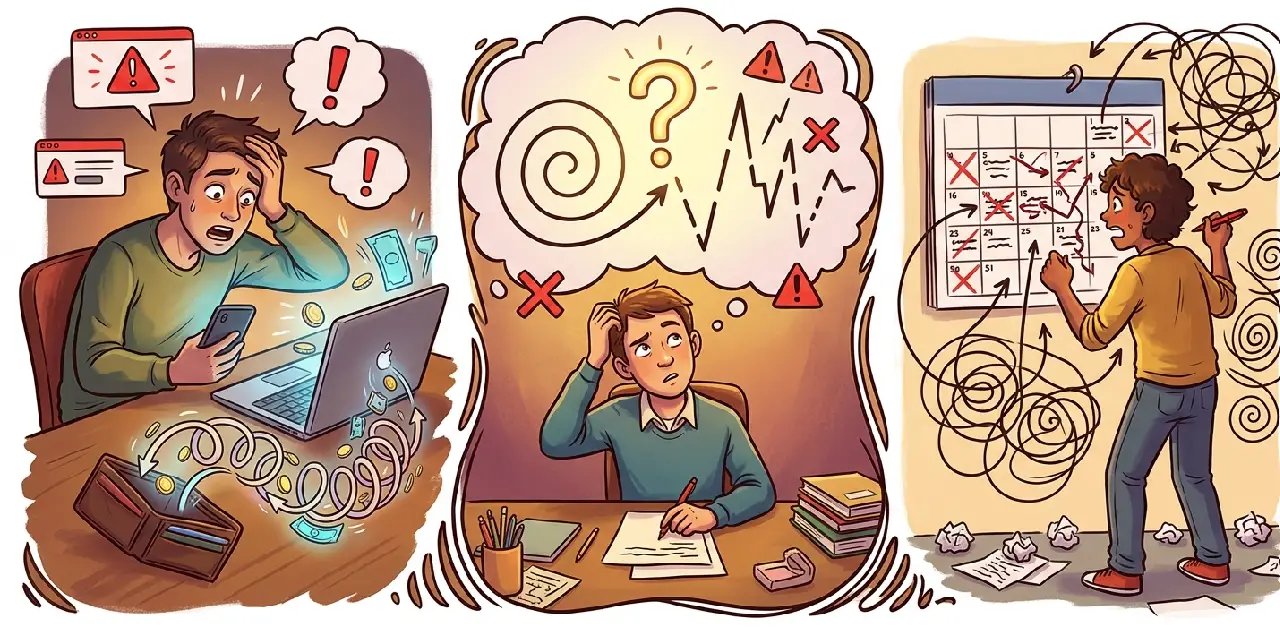
A few small errors show up often enough to be worth flagging:
- Using “recurring” and “reoccurring” interchangeably in formal writing. While common in casual speech, formal or technical writing benefits from the more precise distinction explained above.
- Misspelling it as “reccuring” or “recuring.” The correct spelling is recurring, with a double “r” and double “r” again — remembering the root word “recur” helps avoid this mistake.
- Using “recurring” for something that only happened once. If an event has only happened one time, “recurring” isn’t the right word — that would call for “isolated” or simply “one-time.”
- Confusing “recurring” with “occurring.” “Occurring” simply means happening, with no implication of repetition, while “recurring” specifically implies something happening again.
Conclusion
At its core, “recurring” describes anything that keeps happening again and again, whether that’s a monthly subscription, a repeating dream, a returning health issue, or a character who keeps popping up in your favorite show. The key idea tying all these contexts together is pattern — something recurring isn’t just happening once; it’s part of an ongoing cycle.
Now that you know the difference between recurring and reoccurring, and how the word shifts slightly across finance, health, entertainment, and math, you’ll be able to use it with more precision — and understand exactly what someone means the next time you see it on a bill, in a doctor’s note, or in casual conversation.
FAQs About Recurring Meaning
What does recurring mean in simple terms?
It means something that keeps happening again and again, often following a regular or repeated pattern.
What is the difference between recurring and reoccurring?
Recurring implies an ongoing, repeated pattern, while reoccurring simply means something happened again, without implying it will keep repeating.
What does a recurring payment mean?
It’s a charge that automatically repeats at set intervals, like a monthly subscription or membership fee.
Is “recurring” the same as “recurrent”?
Yes, they share the same meaning, but “recurrent” is more common in formal or medical writing, while “recurring” is used more broadly.
What is a recurring decimal?
It’s a decimal number in which a digit or sequence of digits repeats infinitely, such as 0.333333…
What is a recurring character in a TV show?
It’s a character who appears periodically throughout a series without being part of the permanent main cast.
Can “recurring” describe a health condition?
Yes, it’s commonly used to describe symptoms or illnesses that return repeatedly after periods of improvement.
Leave a Reply