

What Does PFP Mean in Text?
You’re scrolling through Instagram or Discord, and someone drops a comment like “love your new pfp” or “change your pfp, it’s blurry.” If you paused for a second wondering what that actually meant, you’re far from the only one.
PFP is one of those short internet abbreviations that show up constantly across texting, social media, and gaming — yet almost nobody explains it clearly the first time you see it.
This guide breaks down exactly what PFP means, where the term came from, how it’s used across different platforms, and how to reply naturally when someone sends it your way.
What Does PFP Mean in Text?
PFP stands for “Profile Picture.” It’s internet slang for the image or avatar someone uses to represent themselves on a social media account, messaging app, or gaming profile.
In simple terms, your PFP is the small photo that shows up next to your name whenever you comment, post, or message someone online.
Instead of typing out “profile picture” every time, people shortened it to PFP because it’s faster to type and fits the casual tone of everyday online conversation.
A few quick facts to frame it:
- PFP is neutral slang, not rude or offensive on its own.
- It’s used across almost every platform that has user profiles.
- The meaning doesn’t change based on who’s using it or what they look like.
- Tone and context decide whether a PFP comment is a compliment, a joke, or genuine feedback.
Why People Search for PFP’s Meaning So Often
A few patterns show up again and again in why this term gets looked up:
- Someone saw it in a comment or DM and wasn’t sure if it was a compliment, a joke, or something else entirely.
- A friend used it casually, and they wanted to understand the reference before replying.
- English isn’t their first language, and the abbreviation gave no obvious clues about its meaning.
- They noticed it in a gaming chat or NFT community and weren’t sure if it meant something different there.
Whatever the reason, the confusion is completely normal — slang like this spreads through daily use long before anyone formally explains it anywhere.
Where Did the Term PFP Come From?
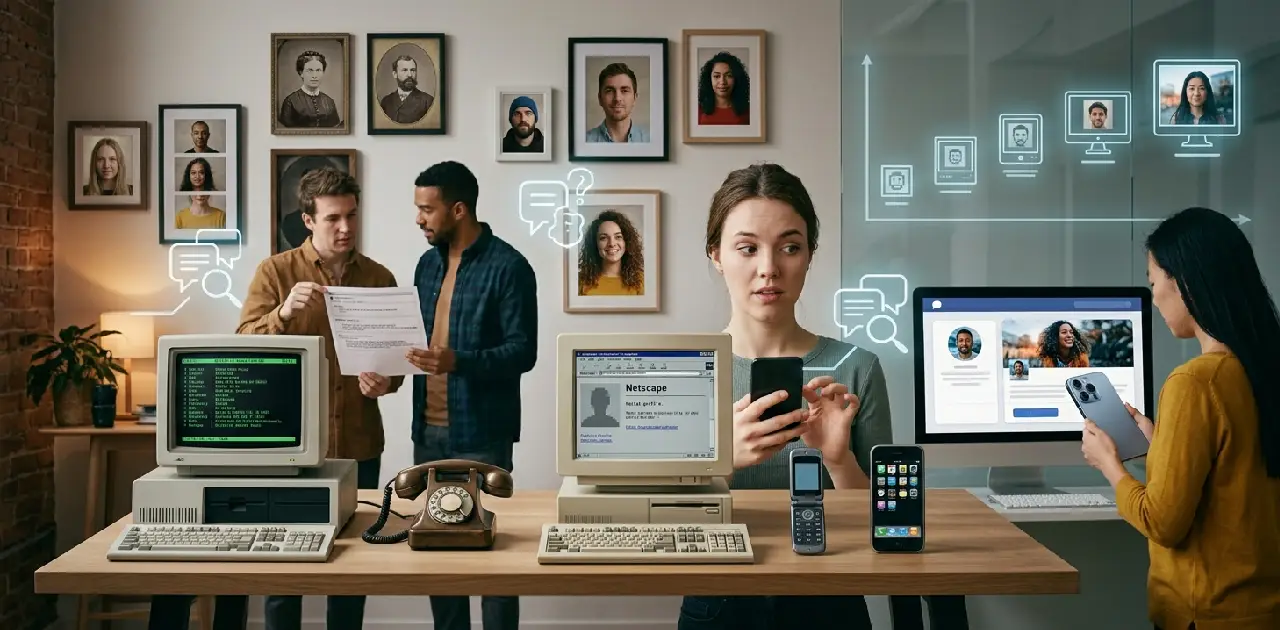
Like most internet slang, PFP didn’t appear overnight — it evolved gradually as online communication moved from desktops to phones.
- Early internet forums and chat rooms — Before texting apps existed, forums needed a quick way to refer to a user’s picture. People typed “profile pic,” and the shorthand naturally followed.
- Meme culture and image boards — Sites like Tumblr and early meme communities helped spread the abbreviation further, since it was short, recognizable, and easy to type on a keyboard.
- Gaming communities — PFP became especially common in gaming spaces, where avatars and profile images are a big part of how players recognize each other.
- Mainstream social media adoption — As Instagram, Discord, and TikTok grew, PFP moved from niche internet culture into everyday chat, becoming one of the most recognized abbreviations online today.
By now, PFP is understood globally, especially among teenagers, gamers, and younger social media users who grew up communicating primarily through short-form digital text.
By now, PFP is understood globally, especially among teenagers, gamers, and younger social media users who grew up communicating primarily through short-form digital text.
PFP Usage Across Generations
Not everyone reads this term the same way, and familiarity often depends heavily on age and how much time someone spends on social platforms.
| Group | Familiarity with PFP | Typical Usage |
|---|---|---|
| Gen Z | Very high; grown up with the term | Uses it constantly and casually |
| Millennials | High; adopted it through social media growth | Uses it knowingly, often interchangeably with “profile pic” |
| Gen X and older | Lower; may prefer the full phrase | Sometimes unfamiliar with the abbreviation |
| Non-native English speakers | Varies widely | Frequently searches for the meaning before replying |
This gap explains why the same comment can land differently depending on who receives it. A casual “nice pfp” from a teenager might completely puzzle someone less familiar with internet slang — which is exactly why guides like this one get searched so often.
How PFP Is Used in Real Conversations
Seeing PFP in context usually makes its meaning click right away. Here are a few realistic examples:
Example 1 — Compliment
A: Your pfp is so cute 😍 B: Thanks! It’s my dog 🐶
Example 2 — Friendly teasing
A: Change your pfp bro, it’s blurry 😂 B: I’ll update it later
Example 3 — Curiosity
A: Who is that in your pfp? B: It’s my favorite anime character
Example 4 — Gaming chat
A: Nice pfp, is that your main character? B: Yeah, took me forever to get that skin
These examples show how flexible the term is — it works as a compliment, a joke, a question, or just casual small talk depending on the conversation.
Where You’ll See PFP Used
PFP shows up almost anywhere online profiles exist. The most common places include:
| Platform | How PFP Is Typically Used |
|---|---|
| Commenting on or asking about someone’s profile photo | |
| Discord | Referring to a user’s avatar in servers and DMs |
| TikTok | Mentioned in comments or captions about a creator’s profile image |
| Snapchat | Used casually when discussing someone’s Bitmoji or photo |
| X (Twitter) | Common in replies referencing someone’s account picture |
| Gaming platforms | Used to describe a player’s avatar or character image |
| Dating apps | Occasionally used when referring to a match’s main profile photo |
Because profiles are a core part of almost every app, PFP has become one of the few slang terms that translate cleanly across completely different platforms.
Why PFP Became So Popular

A few simple reasons explain why this abbreviation caught on so widely:
- It saves time. Typing three letters is faster than typing “profile picture” every time.
- It matches internet culture. Short, casual abbreviations fit the fast-paced tone of texting and social media.
- It signals identity. A person’s PFP often reflects their personality, interests, or mood, making it a natural talking point.
- It sounds more modern. Using “PFP” instead of the full phrase feels more native to online spaces, especially among younger users.
Your PFP essentially works as your digital face — often the very first thing someone notices before they read a single word you’ve typed.
Does PFP Mean Anything Else?
While “Profile Picture” is by far the most common meaning, a few other contexts use the same three letters differently. These are far less common in everyday texting, but worth knowing so you don’t misread the situation.
| Context | What PFP Might Mean | How Common It Is |
|---|---|---|
| Texting / Social Media | Profile Picture | Extremely common |
| NFT / Crypto Communities | Profile Picture Project (a collection of NFT avatar images) | Fairly common in crypto spaces |
| Business / Finance | Prepaid or Pay For Performance (varies by industry) | Rare, context-specific |
| Aviation | Pilot Flying Pilot (informal shorthand in some training contexts) | Very rare |
Outside of niche industries, if you see PFP in a chat, comment, or caption, it’s almost certainly referring to a profile picture.
PFP in NFT and Crypto Communities
One context worth explaining a bit further is the NFT world, where “PFP” carries a slightly different weight. Here, a PFP project refers to a collection of unique, often algorithmically generated avatar images —
Think collections like Bored Ape Yacht Club or CryptoPunks — where owning a specific image often doubles as a form of digital identity or community membership.
In these communities, people frequently set their actual social media profile picture to their owned NFT, which is part of why the term “PFP” became closely tied to crypto culture during the NFT boom.
Even so, this remains a specialized use of the term — for the vast majority of everyday chats, PFP simply means a regular profile picture.
PFP vs. Similar Terms
PFP often gets mixed up with a few other terms that describe similar things. Here’s how they actually differ:
| Term | Meaning | Where It’s Common |
|---|---|---|
| PFP | Profile Picture | Social media, gaming, texting |
| DP | Display Picture | Older term, still common in some regions |
| Avatar | A digital character or image representing a user | Gaming, virtual platforms |
| Icon | A small symbolic image tied to an account | General online use |
| Banner/Header | The larger cover image at the top of a profile | Social media profiles |
The key difference is that PFP specifically refers to the main, small display image tied to an account — not the larger banner or a general avatar used in-game.
Is It Okay to Use PFP in Every Conversation?
Generally, yes — PFP is casual, friendly slang that fits naturally into everyday online chats. That said, context still matters.
Fine to use:
- Casual chats with friends, followers, or online communities
- Comments on social media posts or stories
- Gaming chats and Discord servers
- Light, informal conversations with people you don’t know well
Best avoided:
- Formal emails or professional communication
- Workplace messaging platforms like Slack when speaking with colleagues or clients
- Any context where clarity matters more than casual tone, such as customer support chats
If you want a slightly more formal alternative, simply saying “profile picture” or “profile photo” works just as well without sounding overly casual.
How to Respond When Someone Mentions Your PFP
Getting a comment about your PFP is almost always low-stakes, but here’s how to handle a few common situations:
If It’s a Compliment
A simple “thanks!” or a quick reply about the image (like who’s in it or why you chose it) keeps the conversation natural.
If It’s Friendly Teasing
Most PFP jokes are lighthearted. A playful response like “I know, I’m changing it soon” fits the tone perfectly.
If Someone Asks About It
Sharing a quick explanation — like what the image is or where it’s from — usually keeps the conversation flowing without overthinking it.
If You’re Not Sure of the Tone
If a comment feels ambiguous, it’s completely fine to respond casually or simply ask what they mean. Most PFP-related comments are neutral, not meant to offend.
What Makes a Good PFP?
Since your PFP often shapes first impressions online, a lot of people put real thought into choosing one. A few common approaches include:
- A clear photo of yourself builds trust and recognition, especially on professional or semi-professional platforms.
- A character, mascot, or illustration — Common in gaming and anime communities, often reflecting personal interests.
- A pet photo — A popular, low-pressure option that still feels personal.
- An abstract or aesthetic image — Often used for branding purposes or a specific visual style.
- A default or blank image — Sometimes seen as inactive or even suspicious, especially on newer accounts.
There’s no universally “correct” choice — the best PFP usually depends on the platform and how the account is being used.
What Your PFP Says About You (Whether You Mean It To or Not)
Like it or not, people form quick impressions based on profile pictures, often before reading a single message or post. A few common (though not always accurate) assumptions include:
- A clear, friendly photo often reads as approachable and trustworthy.
- A default or blank image can seem inactive, new, or even suspicious, especially on platforms prone to spam accounts.
- A character or illustrated avatar often signals a specific fandom, gaming interest, or aesthetic preference.
- A pet photo tends to come across as warm and low-pressure, without revealing much personal information.
- A blurry or outdated photo can sometimes prompt friendly teasing, similar to the examples shown earlier in this guide.
None of these assumptions are hard rules, but they explain why so many online conversations end up referencing someone’s PFP in the first place — it really is one of the first things people notice.
Common Mistakes People Make with PFP
Even people familiar with the term can still misuse or misread it in conversation. A few frequent mistakes worth avoiding:
- Assuming a PFP comment is always about appearance. Many PFP comments are about the image choice itself — a character, pet, or theme — not the person behind it.
- Using it in formal communication. Slang like PFP doesn’t fit well in professional emails or workplace platforms, even in casual company cultures.
- Confusing it with a banner or header image. PFP refers specifically to the small profile image, not the larger cover photo on a profile.
- Overthinking a neutral comment. Most PFP-related messages are casual and harmless, even if the wording feels blunt at first glance.
- Assuming everyone knows the term. Not every reader is fluent in internet slang, so context and clarity still matter in unfamiliar conversations.
Why This Slang Confuses Some People

Even though PFP is common, it still trips up plenty of people for understandable reasons:
- It looks unfamiliar at first glance, especially to those newer to a platform.
- Non-native English speakers often encounter it without any context clues.
- Older generations or occasional social media users may not recognize abbreviations that younger, more active users use daily.
- Similar-looking terms like DP or avatar sometimes get confused with PFP, even though they aren’t always identical.
If you’ve ever felt behind on internet slang, this is a completely normal experience — these terms spread through casual use long before anyone formally explains them.
Quick Recap: PFP at a Glance
- Full meaning: Profile Picture
- Tone: Neutral, casual
- Where it’s used: Instagram, Discord, TikTok, Snapchat, X, gaming platforms
- Best used: Casual chats, comments, and informal conversations
- Avoid using it: Formal emails or professional communication
- Other meanings: Profile Picture Project (NFTs), rare finance/aviation shorthand
Conclusion
PFP is a simple, widely understood piece of internet slang that means exactly what it sounds like — your profile picture. Whether someone’s complimenting it, teasing you about it, or just asking who’s in the photo, the term itself carries no hidden meaning or negativity.
The real skill isn’t memorizing the definition — it’s reading the tone around it. Once you understand that PFP simply refers to the image representing someone online, every conversation involving it becomes a lot easier to navigate.
FAQs
What does PFP stand for in text?
PFP stands for “Profile Picture,” the image someone uses to represent themselves online.
Is PFP the same as DP?
They’re very similar — PFP means Profile Picture, while DP means Display Picture, and both refer to the same type of image.
Is PFP slang rude or offensive?
No, PFP is neutral slang and is not considered rude or offensive on its own.
What does PFP mean on Discord?
On Discord, PFP refers to a user’s avatar or profile image shown next to their username.
Can PFP mean something other than profile picture?
Rarely, yes — in NFT communities, it can mean “Profile Picture Project,” though this is far less common than the standard meaning.
Should I avoid using PFP in professional settings?
Yes, it’s best to say “profile picture” instead of “PFP” in formal emails or workplace communication.
What does PFP mean in the NFT world?
In NFT communities, PFP can also refer to a “Profile Picture Project,” a collection of unique digital avatar images used as identity or membership symbols.
Why do people change their PFP so often?
People often update their PFP to reflect a mood, event, interest, or milestone, since it acts as a quick form of online self-expression.
Leave a Reply