
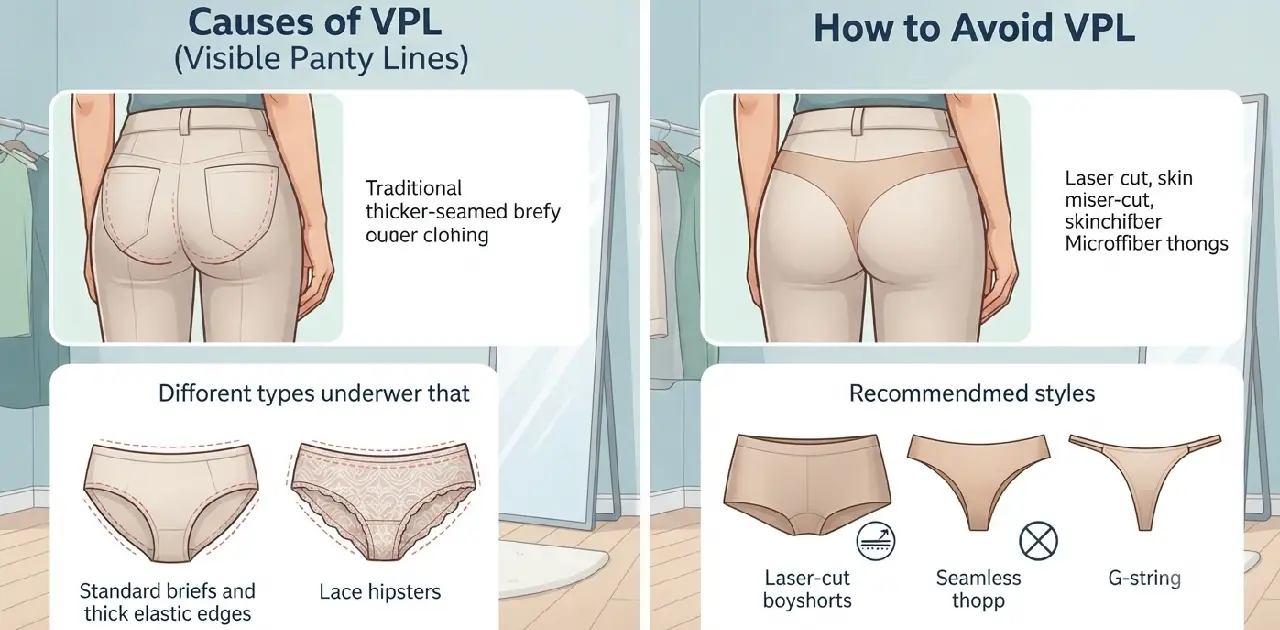
Panty Lines Explained: What Causes VPL and How to Avoid It
Few style frustrations are as common, or as avoidable, as putting on a great outfit and then noticing the outline of your underwear showing right through it. That outline has a name: the visible panty line, or VPL for short, and it’s one of the most searched-about fit issues in fashion.
The good news is that panty lines are almost always fixable with a few small adjustments. It usually comes down to picking the right underwear style, the right fabric, and knowing which pieces work best with which outfits. None of it requires giving up comfort or spending a fortune.
VPL has become a much bigger topic in recent years as activewear, leggings, and bodycon styles have grown more popular. Clothing that hugs the body closely looks great, but it also leaves very little room to hide a bulky seam or an ill-fitting waistband. That’s part of why so many underwear brands now design specifically around minimizing visible lines, from laser-cut edges to seamless bonding techniques that didn’t exist in mainstream underwear a decade ago.
This guide breaks down exactly what causes visible panty lines, which underwear styles actually solve the problem, and how to double-check your outfit before you walk out the door. Whether you’re dressing for leggings, a bodycon dress, or dress pants at the office, there’s a practical fix here for it.
What Is a Panty Line (VPL)?
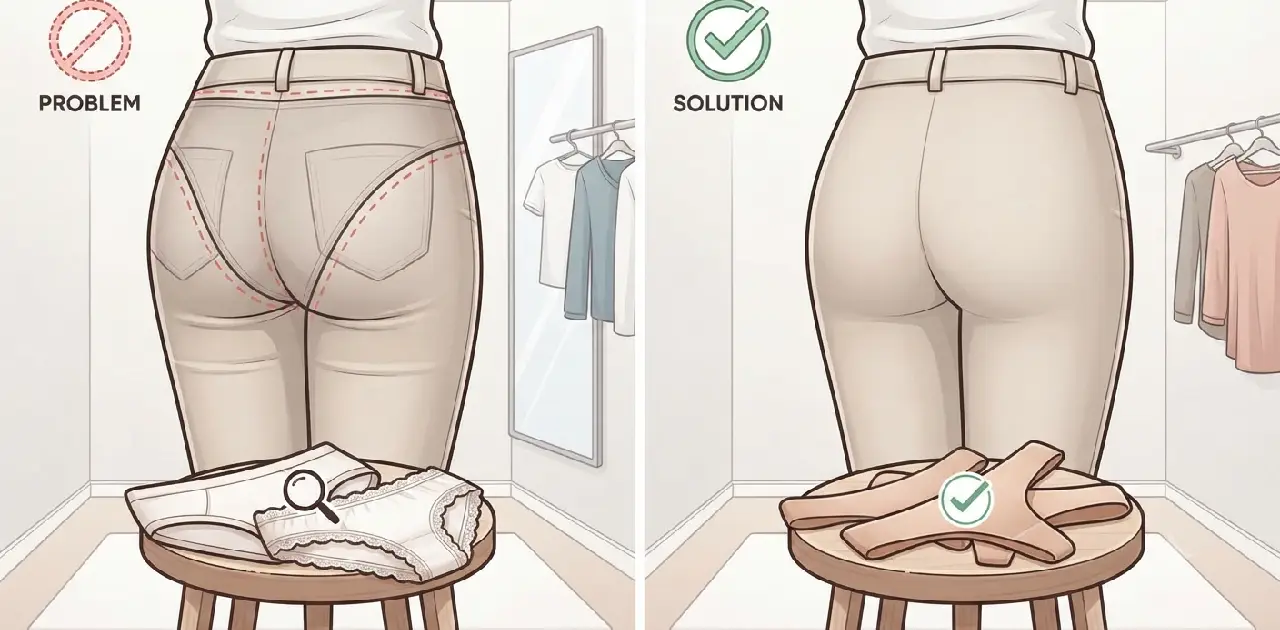
A panty line, often shortened to VPL for “visible panty line,” is the outline or indentation of your underwear showing through your outer clothing. It usually appears around the hips, waistband, or seat, and it’s most noticeable under tight or lightweight fabrics like leggings, fitted skirts, thin trousers, or bodycon dresses.
VPL isn’t a flaw or a fashion failure; it’s simply a fit issue that happens when underwear seams, elastic, or fabric create a visible ridge under clothing. It can show up on any body type and with almost any underwear style if the fabric or fit isn’t matched to the outfit correctly.
Panty lines tend to be most visible in a few common situations:
- Wearing tight or stretchy clothing like leggings, yoga pants, or fitted dresses
- Wearing light-colored or sheer fabrics that show more detail underneath
- Wearing underwear with thick seams, lace trim, or a snug waistband
- Standing under bright light or direct sunlight, which highlights texture and shadows
What Causes Visible Panty Lines
Understanding the cause makes it much easier to fix. VPL usually comes down to a mismatch between your underwear and your outer clothing, rather than any single style being inherently “wrong.”
- Thick seams and elastic bands. Traditional underwear often has stitched seams and elastic edges that create a raised line under fabric.
- Underwear that’s too tight. Snug underwear can dig into skin, creating an indentation that shows through clothing, especially around the hips and seat.
- Underwear that’s too loose. Loose underwear can bunch or shift, creating visible lines and wrinkles under fitted clothing.
- Fabric mismatch. Thin, clingy, or sheer outer clothing shows far more detail than thicker, structured fabric.
- Lace or embroidered trim. Decorative details can look great on their own, but raised lace edges often show through clothing more than plain, flat-seamed styles.
- Color contrast. Bright white or brightly colored underwear tends to stand out more under pale or sheer clothing than underwear closer to your skin tone.
A helpful way to picture this is to imagine a wide belt worn under a thin shirt. Even a slight ridge from the belt will show through the fabric, especially if the shirt is pulled snug. Underwear works the same way; any raised edge or seam has the potential to telegraph through whatever fabric sits on top of it, and the thinner or tighter that outer fabric is, the more obvious the ridge becomes.
Best Underwear Styles to Avoid Panty Lines
Different underwear silhouettes handle VPL differently. Some eliminate the line almost entirely, while others simply move it somewhere less noticeable. Here’s a breakdown of the most reliable options.
| Underwear Style | How It Helps With VPL | Best For |
|---|---|---|
| Seamless briefs | Smooth, bonded edges with no visible stitching | Everyday wear under most outfits |
| Thongs | Minimal fabric across the seat means little to show through | Tight dresses, leggings, bodycon styles |
| Boyshorts | Coverage sits low on the thigh, away from the seat | Fuller coverage without a visible seat line |
| High-cut briefs | Higher leg opening avoids the typical seat crease | Fitted skirts and dresses |
| Shapewear or slip shorts | Smooths the entire area, not just the underwear line | Special occasions, bodycon dresses, formalwear |
Seamless Underwear
Seamless styles use bonded or laser-cut edges instead of traditional stitching, which means there’s no raised seam to create a ridge under clothing. These tend to work well for daily wear since they combine a smooth silhouette with reasonable coverage.
Thongs
Thongs remain one of the most popular VPL solutions because there’s minimal fabric across the seat to begin with. Since the fabric sits between rather than across, there’s very little surface area left to create a visible line. They’re not for everyone, but for tight-fitting outfits, they’re a reliable option.
Boyshorts
Boyshorts take the opposite approach, offering fuller coverage while keeping the seam low on the thigh rather than across the seat. This makes them a good option for anyone who wants more coverage without sacrificing a smooth silhouette.
High-Cut Briefs
High-cut styles raise the leg opening higher than traditional briefs, which shifts the seam away from the typical crease at the top of the thigh. This can help reduce visible lines, especially under skirts and dresses.
Shapewear and Slip Shorts
Shapewear smooths more than just the underwear line; it evens out the entire hip and thigh area, which can help hide lines from other layers as well, like a slip or a fitted lining. Slip shorts are especially useful under skirts and dresses since they prevent chafing while also smoothing your silhouette.
Best Fabrics and Seam Types for a Line-Free Look
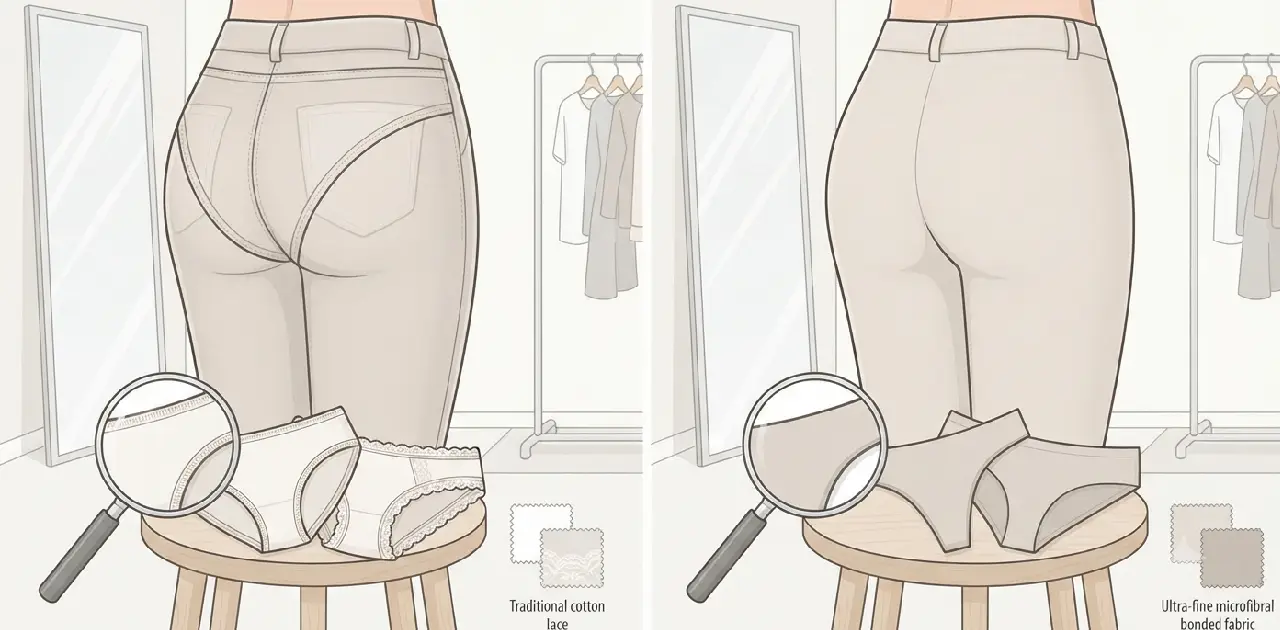
Beyond the style itself, fabric and seam construction play a major role in whether underwear shows through clothing. Here’s what to look for.
- Microfiber and modal blends. These fabrics are thin, smooth, and create less friction against outer clothing than traditional cotton.
- Laser-cut or bonded edges. These eliminate the raised stitching found in traditional underwear construction.
- Flat, low-profile waistbands. A wide, flat waistband that lies smoothly against the skin is far less likely to dig in and create an indentation than a narrow, tight elastic band.
- Minimal or flat lace trim. Delicate, flat lace can look nice without creating a visible ridge, while thick embroidered or scalloped lace often does the opposite.
- Nude or skin-tone shades. Underwear closer to your natural skin tone tends to disappear better under light or sheer fabrics than bright white or bold colors.
Choosing Underwear Based on Your Outfit
Different outfits call for different underwear strategies. Use this table as a quick reference for what tends to work best.
| Outfit Type | Recommended Underwear |
|---|---|
| Leggings or yoga pants | Seamless briefs or thongs in a matching skin tone |
| Bodycon dress | Shapewear, slip shorts, or high-cut seamless briefs |
| Fitted work trousers | Seamless briefs or boyshorts in a neutral tone |
| Sheer or light-colored fabric | Nude-toned, seamless styles rather than bright colors |
| Loose skirts or flowing pants | Slip shorts for smoothing and comfort |
| Swimwear or activewear | Seamless, moisture-wicking styles designed for movement |
Clothing Tips to Minimize Panty Lines
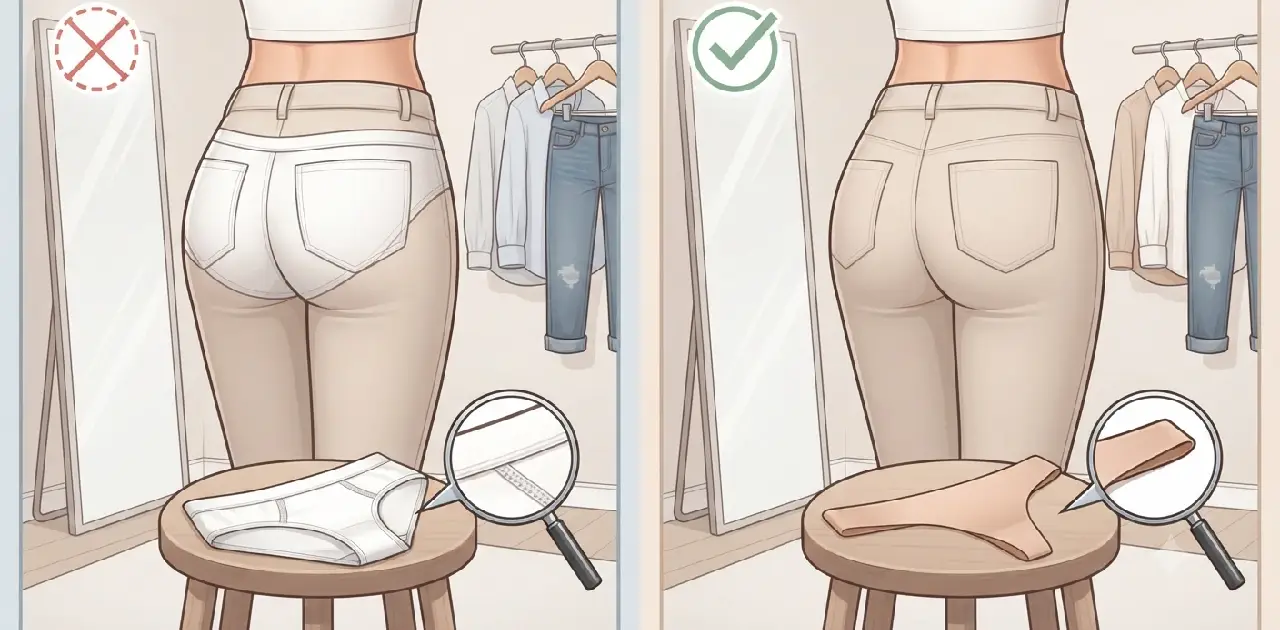
Underwear choice is only half the equation. The clothing itself plays a big role in how visible a panty line ends up being.
- Choose thicker or structured fabrics when possible. Heavier fabric hides more than thin, clingy material, since there’s more layering to soften any ridges underneath.
- Avoid very sheer fabrics unless intentional. Sheer clothing shows far more detail underneath, so double-check garments in bright light before wearing them out.
- Consider patterns and prints. Busier patterns can help disguise minor lines better than solid, light-colored fabric.
- Layer with a slip when needed. A slip adds a smoothing layer between your underwear and outer clothing, especially useful under dresses and skirts.
- Match your underwear tone to your outfit. Nude tones tend to blend in better under light clothing, while darker tones work better under dark fabric.
- Size up your outer layer slightly if it’s very tight. Extremely fitted clothing leaves little room to hide any texture underneath, even with the best underwear choice.
Panty Line Solutions by Clothing Fabric
Not all fabrics behave the same way, and knowing how a specific material reacts to underwear can help you plan. Here’s a breakdown by common fabric type.
| Fabric | VPL Risk Level | Best Underwear Pairing |
|---|---|---|
| Denim | Low to moderate | Most styles work, though thick seams can still show on skinny fits |
| Knit or jersey | High | Seamless briefs or thongs, since knit clings closely to the body |
| Silk or satin | High | Nude, seamless styles, since these fabrics reveal texture easily |
| Sheer chiffon | Very high | Skin-tone shapewear or slip shorts for a fully smooth look |
| Ponte or scuba knit | Moderate to high | Seamless briefs, since this fabric is common in bodycon styles |
| Structured cotton | Low | Most underwear styles work well due to the fabric’s thickness |
Lighter, clingier fabrics like knit, silk, and chiffon show the most detail, which is why they benefit most from seamless or minimal-coverage underwear. Thicker, more structured fabrics like denim and structured cotton are more forgiving and tend to hide typical seams without much extra effort.
How Underwear Age and Fit Affect Panty Lines
Underwear doesn’t stay in ideal shape forever, and older pieces can actually contribute to VPL even if they worked fine when new. A few things to keep in mind:
- Elastic wears out over time. Stretched-out elastic can bunch or fold in ways that create new lines, even in previously reliable underwear.
- Fabric can thin with repeated washing. Thinner fabric shows more texture and detail underneath clothing, which can make older underwear less effective at hiding lines.
- Body changes affect fit. Underwear that fit perfectly at one point may run tighter or looser after changes in weight or body shape, which can affect how well it lies flat.
- A general rule of thumb is to replace underwear every six to twelve months of regular wear, or sooner if you notice stretched elastic, thinning fabric, or ongoing fit issues.
Common Myths About Panty Lines
A few misconceptions tend to circulate about VPL, and clearing them up can save some frustration and unnecessary shopping.
- Myth: Thongs are the only real solution. While thongs are effective, seamless briefs and boyshorts can work just as well depending on the outfit and personal comfort.
- Myth: Going without underwear is always the safest option. Skipping underwear entirely can actually cause more visible lines from fabric bunching, plus it isn’t the most hygienic or comfortable choice for most situations.
- Myth: Expensive underwear always means no VPL. Price doesn’t guarantee a seamless fit; construction details like laser-cut edges and fabric type matter far more than the price tag.
- Myth: VPL only happens with cheap clothing. Even well-made, expensive outer clothing can show panty lines if the underwear underneath isn’t matched to the fabric.
- Myth: One underwear style works for every outfit. Different fabrics and silhouettes call for different underwear choices, which is why having a few reliable options on hand makes the biggest difference.
Panty Lines and Period Underwear
For those who wear period underwear, avoiding VPL can feel like an extra challenge since these styles often need a slightly thicker gusset for absorbency. The good news is that many period underwear brands now offer seamless designs with flat, bonded edges specifically built to minimize visible lines while still providing reliable protection. Looking for styles labeled as seamless or laser-cut is the easiest way to get both functionality and a smooth silhouette in one piece.
How to Check for Panty Lines Before You Leave the House
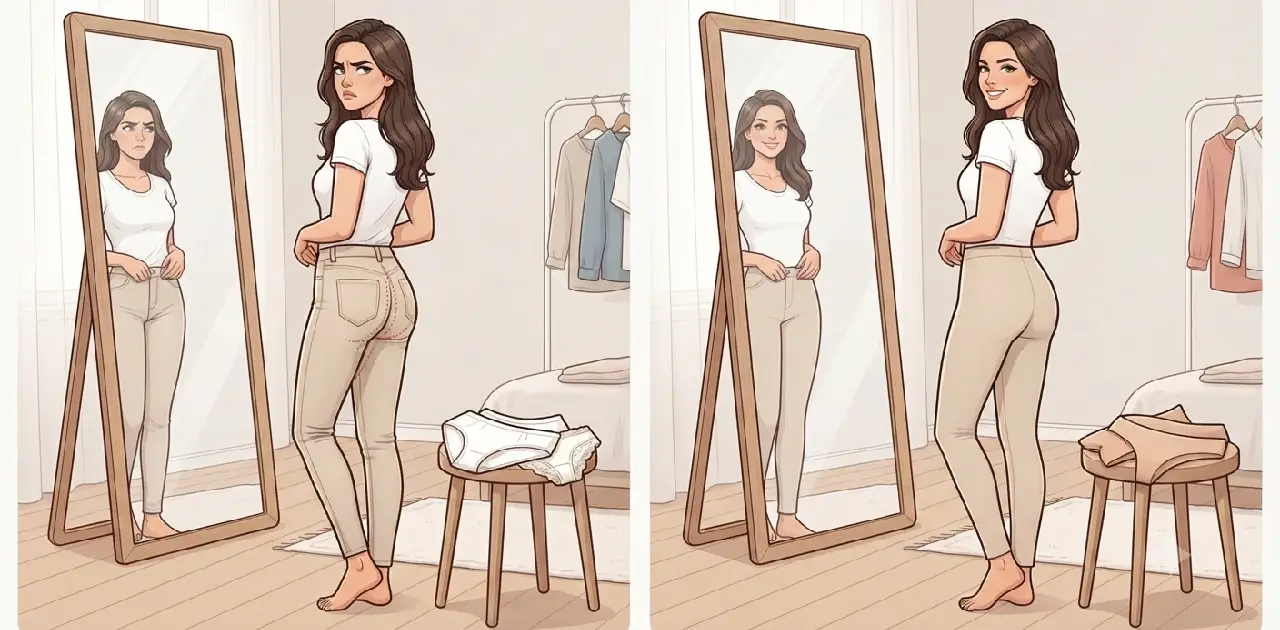
A quick pre-outfit check can save you from an unwanted surprise later in the day. Follow these steps before heading out.
- Look at yourself from all angles in a full-length mirror, not just from the front.
- Bend over slightly to see how the fabric moves and whether any lines appear that weren’t visible while standing.
- Sit down for a moment, since some panty lines only show up once fabric is pulled tighter while seated.
- Check under bright light or natural sunlight, since indoor lighting can hide details that become obvious outdoors.
- Do a small squat test, especially for leggings or activewear, since movement can reveal lines that aren’t visible while standing still.
- Take a photo if you’re unsure, since cameras sometimes catch details eyes tend to miss in the mirror.
Common Mistakes That Cause Panty Lines
Most panty line problems come down to a handful of repeat offenders. Recognizing these patterns makes it much easier to troubleshoot an outfit before it becomes an issue.
| Mistake | Better Approach |
|---|---|
| Wearing underwear that’s too small for your size | Size up or check a proper size guide before buying |
| Choosing bright white underwear under light clothing | Opt for nude or skin-tone shades instead |
| Sticking with traditional seamed underwear for tight outfits | Switch to seamless or laser-cut styles for fitted clothing |
| Ignoring fabric weight when shopping for bottoms | Choose slightly thicker fabric for tighter-fitting pieces |
| Skipping the mirror check before leaving the house | Always do a quick front, side, and back check before heading out |
| Assuming one underwear style works for every outfit | Match underwear style to the specific outfit you’re wearing |
Most of these mistakes are easy to fix once you know what to look for, and building a small habit of checking fit and fabric before wearing something new can prevent nearly all of them.
Panty Lines and Different Body Shapes
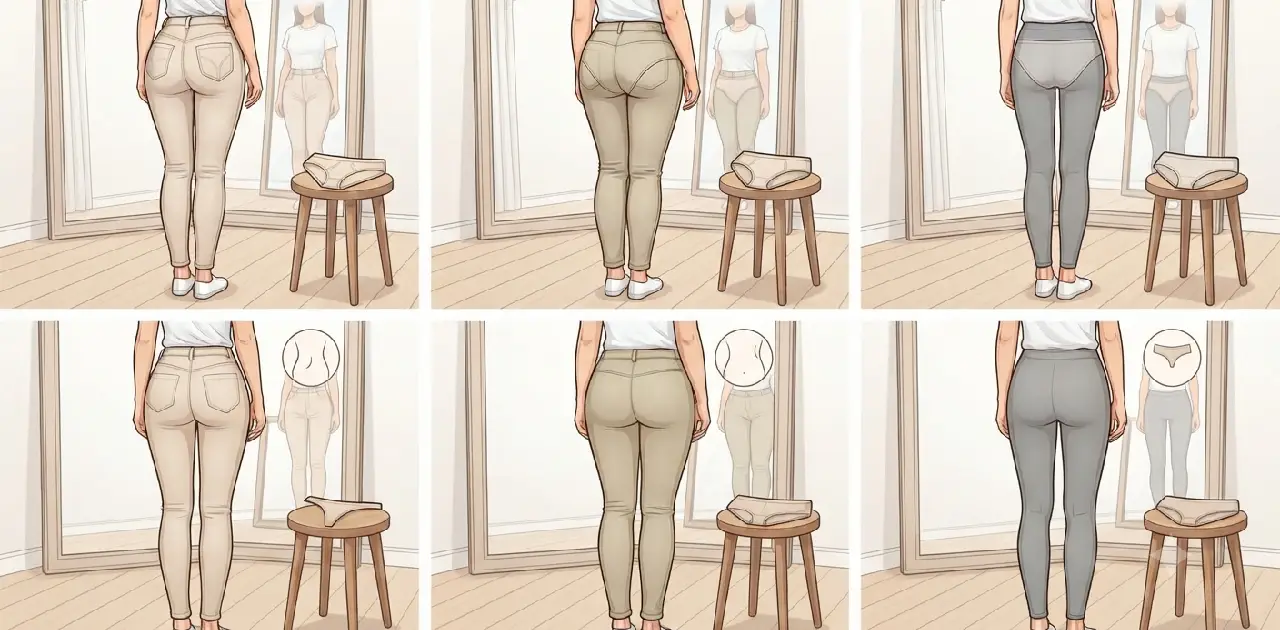
Everyone’s body is different, and the same underwear style won’t necessarily work the same way for everyone. A few general considerations can help narrow down what to try first.
- Fuller hips and thighs. High-cut briefs or boyshorts with a wider leg opening tend to sit more comfortably without creating a tight band that digs in.
- Smaller frames. Seamless briefs or lower-rise thongs often work well, since there’s less fabric overall to create visible bulk.
- Curvier midsections. Higher-waisted seamless styles or shapewear can smooth the waistband area in addition to preventing lines at the seat.
- Athletic builds. Moisture-wicking seamless styles designed for activewear tend to move well without bunching during exercise or daily activity.
None of these are strict rules, since comfort and personal preference matter just as much as body shape. Trying a few different styles is usually the fastest way to find out what actually works best for your specific body and wardrobe. It’s also worth keeping in mind that the same underwear brand can fit differently across different cuts, so even within one label it may take some trial and error to land on the style that disappears most effectively under your usual wardrobe.
Building a VPL-Proof Underwear Drawer
Rather than buying one perfect pair of underwear, it helps to build a small rotation of styles suited to different outfits. A practical starting point includes:
- A few pairs of seamless briefs in nude and black for everyday wear under most clothing.
- At least one pair of thongs for tight dresses, leggings, or bodycon outfits.
- A pair of shapewear shorts or slip shorts for formal occasions or special events.
- Boyshorts or high-cut briefs for days when more coverage is preferred without sacrificing a smooth line.
Having this small variety on hand means you’re rarely stuck without an option, regardless of what the day’s outfit calls for.
Is a Panty Line Actually a Problem?
It’s worth remembering that a visible panty line isn’t inherently a flaw; it’s simply a style detail that some people prefer to avoid, and others don’t mind at all. For everyday, casual outfits, a slight VPL usually isn’t noticeable enough to matter. It tends to become more relevant in specific situations, like formalwear, professional settings, or outfits made from very tight or sheer fabric where a smooth silhouette is the goal.
If avoiding VPL matters to you for a specific event or outfit, the fixes above will usually solve it. If it doesn’t bother you, there’s genuinely nothing wrong with skipping the extra steps and wearing whatever’s comfortable.
Frequently Asked Questions
What does VPL stand for?
VPL stands for “visible panty line,” referring to the outline or indentation of underwear showing through outer clothing.
What underwear is best to avoid panty lines?
Seamless briefs, thongs, and high-cut styles with laser-cut edges tend to work best for avoiding visible panty lines.
Does underwear color matter for VPL?
Yes, nude or skin-tone shades tend to blend in better under light or sheer clothing than bright white or bold colors.
Can shapewear help with panty lines?
Yes, shapewear smooths the entire hip and seat area, which can help hide underwear lines along with other minor fabric bumps.
Why do my leggings show panty lines even with seamless underwear?
Very thin or clingy legging fabric can still reveal texture underneath, so pairing seamless underwear with slightly thicker fabric usually helps.
Is it bad to have a visible panty line?
No, it’s simply a style preference; some people avoid it for certain outfits while others don’t mind it at all.
How can I test if my outfit shows panty lines before leaving the house?
Check yourself in a mirror from multiple angles, bend over, sit down, and look under bright light to catch any lines that might not show while standing still.
How often should I replace my underwear to avoid VPL?
Every six to twelve months of regular wear is a reasonable guideline, or sooner if you notice stretched elastic or thinning fabric.
Does period underwear cause more visible panty lines than regular underwear?
It can, due to the thicker absorbent gusset, but many brands now offer seamless period underwear designed specifically to minimize VPL.
Do thicker fabrics always hide panty lines better than thin ones?
Generally yes, thicker or more structured fabric tends to disguise underwear seams better than thin, clingy, or sheer material.
Is there one underwear style that works for every body type?
Not necessarily; different body shapes and outfits benefit from different styles, so it helps to have a small rotation of options on hand.
Final Thoughts
Panty lines are one of the most common, and most fixable, fit issues in fashion. Understanding what causes VPL, thick seams, tight elastic, and fabric mismatch makes it much easier to choose the right underwear and clothing combination for any outfit.
Whether you reach for seamless briefs, a thong, boyshorts, or shapewear, the right choice usually comes down to matching your underwear to the specific outfit you’re wearing that day. A quick mirror check before you head out is always worth the extra thirty seconds, and with the right pieces in your drawer, VPL becomes a problem you rarely have to think about again.
At the end of the day, panty lines are a completely normal part of getting dressed, not a flaw to be embarrassed about. Whether you choose to eliminate them entirely or simply don’t mind them showing on a casual day, having the right knowledge and a few reliable underwear options gives you the freedom to decide what works best for you.
Leave a Reply