

CM Meaning in Text: What Does CM Stand For?
You’re in the middle of texting someone about something important, and instead of continuing the conversation, they simply reply: “CM.”
No explanation, no follow-up — just two letters. Are they asking you to do something? Ending the conversation? It’s easy to feel stuck for a second, especially when the message shows up out of nowhere.
CM is one of those short texting abbreviations that look simple but leave a lot of people second-guessing themselves.
This guide breaks down exactly what CM means, where it came from, how it’s different from similar-looking abbreviations, and how to reply naturally the next time it shows up in your messages.
CM Meaning: Quick Answer
CM most commonly stands for “Call Me.” It’s a quick, casual way of asking someone to phone you instead of continuing the conversation over text — usually because the topic feels better suited to a real conversation than a back-and-forth of messages.
| Detail | Information |
|---|---|
| Most common full form | Call Me |
| Alternate meanings | Centimeter (measurement), Check Message, Come On, Community Manager |
| Tone | Casual, neutral, sometimes urgent |
| Common on | WhatsApp, Instagram, Snapchat, workplace chats, gaming platforms |
| Best used with | Friends, family, casual coworker conversations |
| Avoid using in | Formal emails, client communication, professional documents |
How to Use CM in a Sentence

CM typically appears as a short, standalone request, often at the end of a message or as a message on its own. Here’s how it usually shows up in real conversations:
- “CM when you get a chance.”
- “CM, I need to tell you something.”
- “Can’t explain this over text, CM.”
- “CM ASAP, it’s kind of urgent.”
- “I’ll CM you once I’m home.”
Notice that CM almost always signals a shift away from texting — the sender wants to move the conversation to an actual phone call, usually because the topic feels too complicated, sensitive, or urgent to type out in full.
Where Did “CM” Come From?
Like most texting abbreviations, CM developed out of the earlier days of SMS texting, when messages were often limited by character counts or charged per text. Abbreviating common phrases like “call me” into two quick letters helped people communicate faster while saving both time and effort.
As texting evolved from basic SMS into modern messaging apps, CM carried over naturally, joining other well-known texting shorthand like TM (“Text Me”) and ASAP (“As Soon As Possible”).
Today, it’s used across nearly every major messaging platform — WhatsApp, Instagram DMs, Snapchat, and even casual workplace chat tools — and remains a simple, widely recognized way to ask someone to switch from texting to a phone call.
When Do People Use CM?
CM tends to show up in a handful of recurring situations, almost all centered around the idea that a topic is better discussed by voice than by text. Common examples include:
- Sharing exciting or surprising news that feels better said out loud than typed.
- Discussing something urgent, where a quick call is faster than a long back-and-forth of messages.
- Clarifying a misunderstanding, especially after a disagreement or confusing exchange.
- Talking through something emotional or sensitive, where tone of voice matters more than text ever could.
- Coordinating plans quickly, especially when details are complicated or time-sensitive.
Example conversation:
Friend: “So… about last night.” You: “What happened?” Friend: “CM, it’s a long story.”
In this kind of exchange, CM signals that the full explanation is coming, just not through text.
Does CM Always Mean “Call Me”?
In casual texting and social media, yes — “Call Me” is overwhelmingly the dominant meaning. That said, a few other meanings exist depending on the context, so it’s worth knowing them to avoid confusion.
| Alternate Meaning | Where It’s Used | Example |
|---|---|---|
| Centimeter | Measurements, academic or technical contexts | “The board is 30 cm long.” |
| Check Message | Casual chats, referring to an earlier message | “Sent the details already, CM.” |
| Come On | Casual reactions, especially among younger texters | “CM, that’s not fair!” |
| Community Manager | Business, marketing, or online community contexts | “Our CM will respond to your comment soon.” |
| Clan Match | Gaming chats, especially competitive multiplayer games | “We’ve got a CM scheduled for tonight.” |
Outside of these specific contexts, though, a plain “CM” in a personal text conversation should almost always be read as a request for a phone call.
How to Tell Which Meaning of CM Is Being Used
Since CM carries a handful of different meanings, context makes all the difference. Here’s a simple way to figure out which one applies:
- Check the topic of conversation. If someone just shared exciting, confusing, or serious news, CM almost certainly means “Call Me.”
- Check the platform. Gaming chats may lean toward “Clan Match,” while business or marketing contexts may point to “Community Manager.”
- Check for numbers nearby. If CM follows a number (like “30 cm”), it’s referring to centimeters, not slang.
- Check your relationship with the sender. A close friend or family member sending a standalone “CM” is very likely asking for a call.
- Check the tone of the message. A short, blunt “CM” during an argument may still mean “call me,” but the urgency behind it may hint at wanting to resolve something quickly by voice.
Is CM Rude?
Generally, no — CM is considered a neutral, practical request, not a rude one. It’s simply a fast way of saying “let’s talk on the phone instead of texting.” That said, a few tone differences are worth noting:
- Casual and low-pressure: “CM whenever you’re free 😊” — reads as relaxed and easygoing.
- Neutral, no extra context: “CM.” — usually still fine, especially between people who text this way often.
- Can feel abrupt: “CM.” (sent with no context, especially after a tense conversation) — this version can occasionally feel more urgent or serious than intended.
If you want to avoid sounding overly blunt, adding a small bit of context — like “CM when you can” or “CM, nothing bad!” — helps keep the tone light.
CM vs. Similar Texting Abbreviations
CM is often grouped with a few other short, action-based abbreviations used in texting. Here’s how they compare.
| Abbreviation | Meaning | Typical Use |
|---|---|---|
| CM | Call Me | Requesting a phone call instead of continuing to text |
| TM | Text Me | Requesting a text reply instead of a call |
| HMU | Hit Me Up | A more general invitation to reach out, by any method |
| PM | Private Message | Asking someone to message privately, often on social media |
| DM | Direct Message | Asking someone to message through a platform’s private inbox |
The key distinction worth remembering: CM specifically asks for a phone call, while similar abbreviations like TM, PM, and DM point toward different communication methods entirely.
Common Mistakes People Make With CM
A few small misunderstandings come up often enough to mention:
- Assuming CM always means centimeter. Outside of measurement-related conversations, “CM” almost always refers to “Call Me” in personal texting.
- Confusing CM with TM. These look similar but request opposite actions — one asks for a call, the other asks for a text.
- Overreacting to a short, context-free “CM.” A plain “CM” isn’t necessarily a sign of bad news — plenty of people use it for exciting updates or quick, simple conversations too.
- Using CM in professional communication. While it’s harmless in casual chats, writing out “Please call me” is more appropriate in formal emails or client-facing messages.
How to Reply to “CM”
If someone sends you “CM,” there’s no need to overanalyze it. A few natural responses work depending on your situation:
- “Sure, calling now!”
- “Can’t talk right now, can I call you in an hour?”
- “On it, give me a few minutes.”
- If you’re curious what it’s about first: “Everything okay? I’ll call you in a sec.”
Is CM Still Used in 2026?
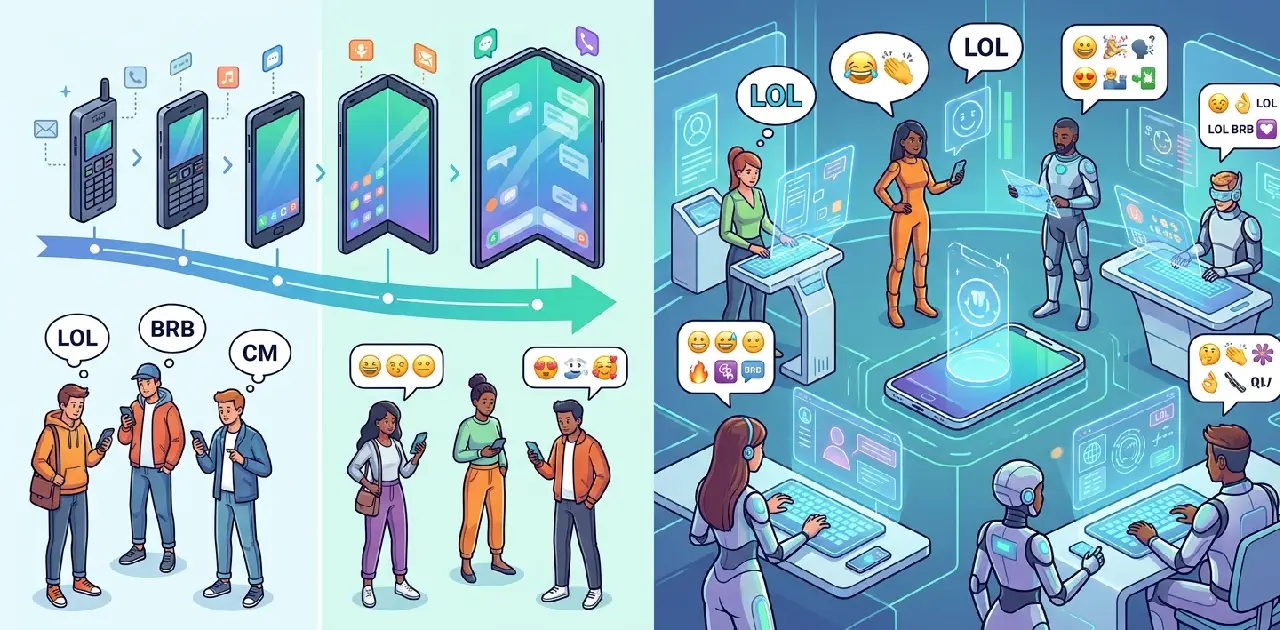
Yes. CM remains a simple, practical abbreviation that continues to show up across texting and messaging platforms. Its usefulness comes down to solving a real, everyday communication need — quickly signaling that a topic is better handled by phone than by text.
While flashier slang terms come and go with trends, straightforward, functional abbreviations like CM tend to stick around because they’re instantly understood by nearly every generation of texters.
Conclusion
At its core, CM is a quick, practical way of asking someone to switch from texting to a phone call. It’s been part of everyday texting shorthand since the early days of SMS, and it has carried that same simple meaning through WhatsApp, Instagram, Snapchat, and workplace chats ever since.
While it can occasionally mean something else — like centimeter, Community Manager, or Clan Match — in personal texting, “Call Me” remains the meaning you’ll encounter the vast majority of the time.
The next time “CM” pops up in your messages, there’s no need to overthink it. In almost every case, it simply means someone would rather hear your voice than read another text.
FAQs About CM Meaning in Text
What does CM mean in a text message?
CM stands for “Call Me,” used when someone wants you to phone them instead of continuing to text.
Does CM always mean “Call Me”?
In personal texting, yes — though it can occasionally mean centimeter, Community Manager, or Clan Match depending on context.
Is CM rude to send someone?
No, it’s generally a neutral, practical request, though adding context can help keep the tone friendly.
What’s the difference between CM and TM?
CM asks for a phone call, while TM (“Text Me”) asks for a text reply instead.
Should I use CM in a work email?
No, it’s casual texting slang and is better replaced with “please call me” in professional or formal communication.
How do I reply if I can’t call right away?
A simple reply like “Can I call you in an hour?” works well and lets the sender know you saw the message.
Is CM still commonly used in 2026?
Yes, it remains a widely recognized and commonly used abbreviation across texting and messaging platforms.
Leave a Reply