
FOMO Meaning in Chat: Why This Feeling Has a Name (And What to Do About It)
I still remember the exact Friday night this happened to me. I’d stayed in to finish a work deadline, feeling perfectly fine about my quiet evening, right up until my group chat exploded with photos from a rooftop dinner three blocks from my apartment.
Everyone was there. Everyone was laughing. And within about ninety seconds of scrolling through those photos, my calm Friday night turned into a small, nagging ache of “I should have gone.” Someone in the chat summed it up perfectly: “ok that’s some serious FOMO energy right now.”
That single word captured exactly what I was feeling, better than any full sentence could have. If you’ve ever had a moment like that, you already understand FOMO on a gut level.
This guide breaks down exactly what the term means, where it came from, and how to use and respond to it naturally in everyday chats.
What Does FOMO Mean in Chat?
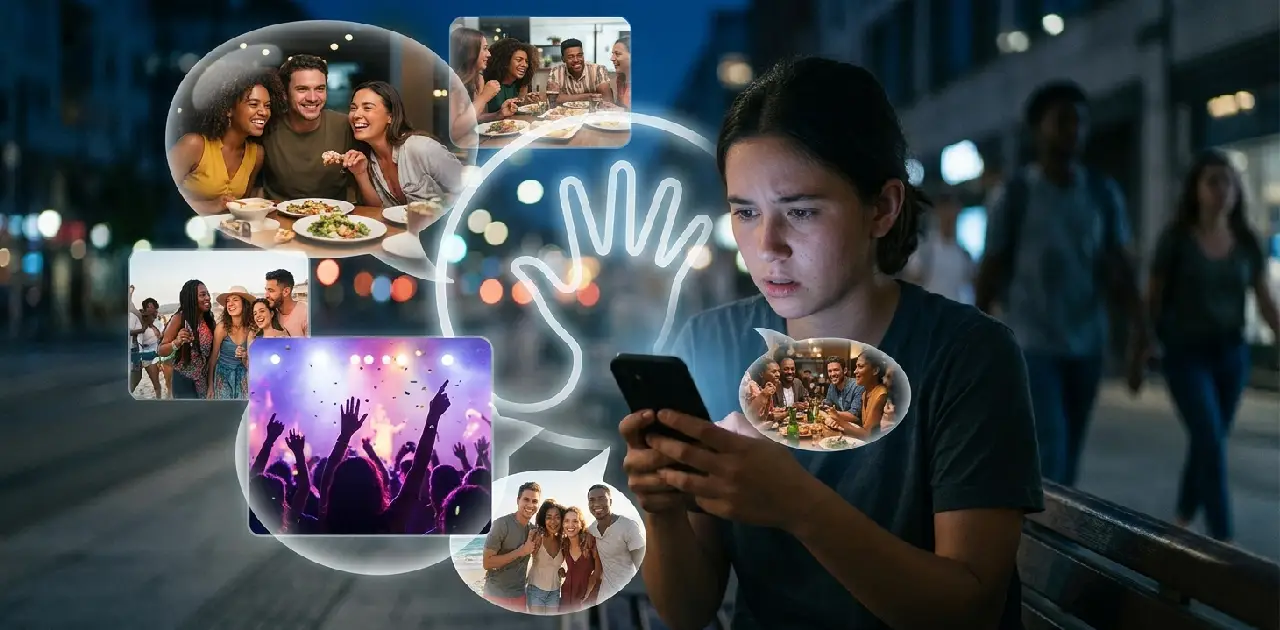
FOMO stands for “Fear Of Missing Out.” It describes that uneasy, anxious feeling that something exciting, fun, or important is happening somewhere else, and you’re not part of it.
In chat and texting, people use it as a quick, relatable way to name that specific emotion without writing out a whole explanation.
Here’s a simple example of how it shows up in conversation:
“You guys went to the concert without me? Major FOMO right now.”
In that message, “FOMO” is doing a lot of emotional work in just one word; it captures disappointment, a little envy, and the sense of being left out, all at once.
Where Did FOMO Come From?
Unlike a lot of internet slang that emerged organically from chatrooms or texting culture, FOMO actually has a specific, well-documented origin. The term was coined in 2004 by Patrick J.
McGinnis was a student at Harvard Business School at the time. He used it to describe a very real social pressure he noticed among his peers, the anxiety of choosing one social event over another and worrying about what you might be missing at the one you skipped.
The term didn’t stay confined to campus life for long. As social media platforms like Facebook, Instagram, and later Snapchat grew,
FOMO found the perfect environment to spread. Suddenly, everyone had a constant window into what their friends, acquaintances, and even strangers were doing in real time, and that visibility made the feeling far more common and far more intense.
By 2013, FOMO had become significant enough as a cultural phenomenon that it was officially added to the Oxford English Dictionary, defined as the anxiety that an exciting or interesting event may be happening elsewhere, often triggered by posts seen on social media.
That official recognition cemented FOMO as more than just internet slang; it became a genuinely useful term for describing a specific, widely shared emotional experience.
The Psychology Behind FOMO
FOMO isn’t just a catchy word; it taps into something deeply rooted in human psychology: the need for social connection and belonging. Humans are wired to care about their social standing and their place within a group, and historically,
being excluded from a group carried real survival risks. While missing a party today obviously doesn’t carry the same stakes, that same underlying wiring still fires when we sense we’re being left out.
Social media has amplified this effect significantly. Before smartphones, you generally only found out about a fun event you missed through word of mouth, often well after the fact, and often without much visual detail. Now,
Platforms like Instagram and TikTok deliver a constant, real-time highlight reel of everyone else’s best moments, parties, vacations, and get-togethers, straight to your phone.
Seeing that content over and over trains the brain to expect and dread being excluded, since the evidence is now impossible to avoid.
Interestingly, research on FOMO also points to it being more intense for certain people than others. Those already dealing with lower self-esteem, anxiety, or body image concerns tend to feel FOMO more frequently and more sharply,
since social comparison hits harder when self-worth already feels a little shaky. Understanding this connection helps explain why FOMO can range from a passing, mildly funny feeling to something that genuinely affects someone’s mood and mental health.
It’s also worth noting that FOMO tends to spike during specific life moments, big holidays, milestone birthdays, and graduation season are all classic triggers, since these are the times when social feeds fill up fastest with celebratory posts.
Even people who don’t consider themselves particularly prone to social comparison often notice a small uptick in FOMO during these periods, simply because the sheer volume of “everyone is doing something exciting” content increases so dramatically.
Common Types of FOMO You’ll Recognize

FOMO doesn’t only show up around parties and social events. It’s expanded to cover a much wider range of everyday anxieties about being left behind or left out.
| Type of FOMO | What It Looks Like |
|---|---|
| Social FOMO | Feeling anxious about missing a party, gathering, or hangout with friends |
| Travel FOMO | Seeing vacation photos and feeling like you’re missing out on experiences |
| Career FOMO | Worrying that others are getting better opportunities, promotions, or job offers |
| Shopping FOMO | Feeling pressure to buy something because of a limited-time sale or a trending product |
| Trend FOMO | Feeling left out of viral moments, memes, or challenges everyone else seems to know about |
| Relationship FOMO | Wondering if you’re missing out on better romantic options while in a relationship |
Recognizing which type of FOMO you’re actually feeling can make a big difference in how you respond to it. Social FOMO after a missed hangout might just call for texting your friends to plan the next one. Shopping FOMO,
On the other hand, is often worth pausing on, since it’s frequently manufactured on purpose by marketing tactics designed to trigger exactly that anxious, act-now feeling.
How FOMO Shows Up Across Different Platforms
While the core meaning of FOMO stays the same everywhere, the way it’s expressed shifts a bit depending on the platform.
FOMO on Instagram
Instagram is often considered ground zero for modern FOMO, since the platform is built almost entirely around sharing highlight-reel moments.
A caption like “your vacation pics are giving me FOMO” is extremely common, especially under posts showing travel, parties, or big life milestones.
FOMO on Snapchat
Because Snapchat feels more real-time and personal than other platforms, FOMO here often hits a little harder.
Watching a friend’s live story unfold while you’re stuck at home can create an immediate, in-the-moment version of the feeling, rather than the slightly delayed FOMO you might get scrolling through an Instagram feed later.
FOMO on TikTok
TikTok trends move incredibly fast, and missing a viral challenge or meme format while it’s still relevant can create its own specific flavor of FOMO, less about missing an event and more about feeling out of the loop culturally.
FOMO in Group Chats
In everyday texting and group chats, FOMO tends to show up in a lighter, more self-aware way. Might someone type “you guys had a whole thing without me?
FOMO 😭” is a half-joking way of saying they wish they’d been included, without it being a genuinely serious complaint.
FOMO vs. JOMO: The Opposite Feeling
As FOMO became more widely discussed, a counter-term emerged to describe the opposite experience: JOMO, or the “Joy of Missing Out.”
JOMO describes the genuine contentment that can come from skipping an event, staying off social media, or simply choosing rest over participation, without any accompanying anxiety.
| Term | Meaning | Typical Feeling |
|---|---|---|
| FOMO | Fear Of Missing Out | Anxious, uneasy, comparison-driven |
| JOMO | Joy Of Missing Out | Content, relaxed, intentional |
JOMO has grown in popularity partly as a response to FOMO culture, a reminder that choosing not to attend something, or stepping back from constant social comparison, can be a genuinely positive choice rather than something to feel bad about.
How to Use FOMO in a Sentence
FOMO is flexible enough to describe the feeling itself, warn someone about an upcoming event, or gently tease a friend. Here are a few natural ways it shows up.
- “I have serious FOMO watching everyone’s festival videos this weekend.”
- “Come with us; don’t let the FOMO get to you later.”
- “Ngl, I only signed up because of FOMO.”
- “Low-key FOMO seeing everyone post about the reunion.”
- “Don’t worry about FOMO, we’ll fill you in on everything you missed.”
How to Respond When Someone Says They Have FOMO
Since FOMO is generally lighthearted, most responses can stay casual and reassuring rather than overly serious.
| Situation | Suggested Response |
|---|---|
| Friend feels FOMO after missing a hangout | We missed you! Let’s plan something soon so you don’t miss the next one. |
| Someone jokes about FOMO over a trend | Join the FOMO club, honestly, same. |
| FOMO over a big life event (wedding, trip) | I get it, but we’ll send you all the details and photos! |
| Genuine, recurring FOMO affecting mood | Check in more seriously: “Hey, want to talk about it? Feeling left out a lot isn’t fun.” |
Most of the time, a warm, slightly playful response is exactly what someone expressing FOMO is looking for.
Occasionally, though, especially if a friend brings it up repeatedly or seems genuinely down about it, it’s worth shifting into a more caring, direct conversation instead of just joking it off.
Is FOMO Good or Bad?
FOMO itself isn’t inherently harmful; it’s simply a name for a very human emotional response. In small doses, it can even be motivating, nudging someone to say yes to an invitation they might have otherwise skipped, or to try something new because it looks genuinely fun.
The problem arises when FOMO becomes a constant background hum rather than an occasional feeling. Frequent, intense FOMO has been linked to increased stress, compulsive social media checking, and a persistent sense of dissatisfaction with one’s own life compared to others.
Recognizing the difference between a passing “aw, wish I’d gone” moment and a recurring pattern of anxiety is genuinely useful for protecting your own mental well-being.
A few practical ways to manage FOMO when it starts feeling like more than a passing feeling:
- Limit social media scrolling during moments when you already feel low. Comparison tends to sting more when you’re already not feeling your best.
- Focus on your own plans rather than everyone else’s highlight reel. Remembering that social media rarely shows the full picture helps put comparison into perspective.
- Say yes more intentionally. If FOMO is pushing you to attend things purely out of anxiety rather than genuine interest, it’s worth pausing to ask what you actually want.
- Practice a little JOMO on purpose. Occasionally choosing to skip something and genuinely enjoying the downtime can help retrain the instinct that missing out always means losing something.
FOMO in Marketing and Business
Beyond personal conversations, FOMO has become a major tool in marketing and advertising. Phrases like “limited time only,” “only 3 left in stock,” or “sale ends tonight” are all deliberately designed to trigger that same anxious urgency that makes FOMO so powerful.
Businesses lean on this because it works; people are far more likely to act quickly when they believe an opportunity might disappear.
This is worth keeping in mind the next time an ad or promotional email creates that familiar FOMO feeling.
Recognizing the tactic for what it is, a manufactured sense of urgency, makes it much easier to pause and make a genuinely thoughtful decision rather than an anxious, reactive one.
FOMO vs. Similar Slang Terms
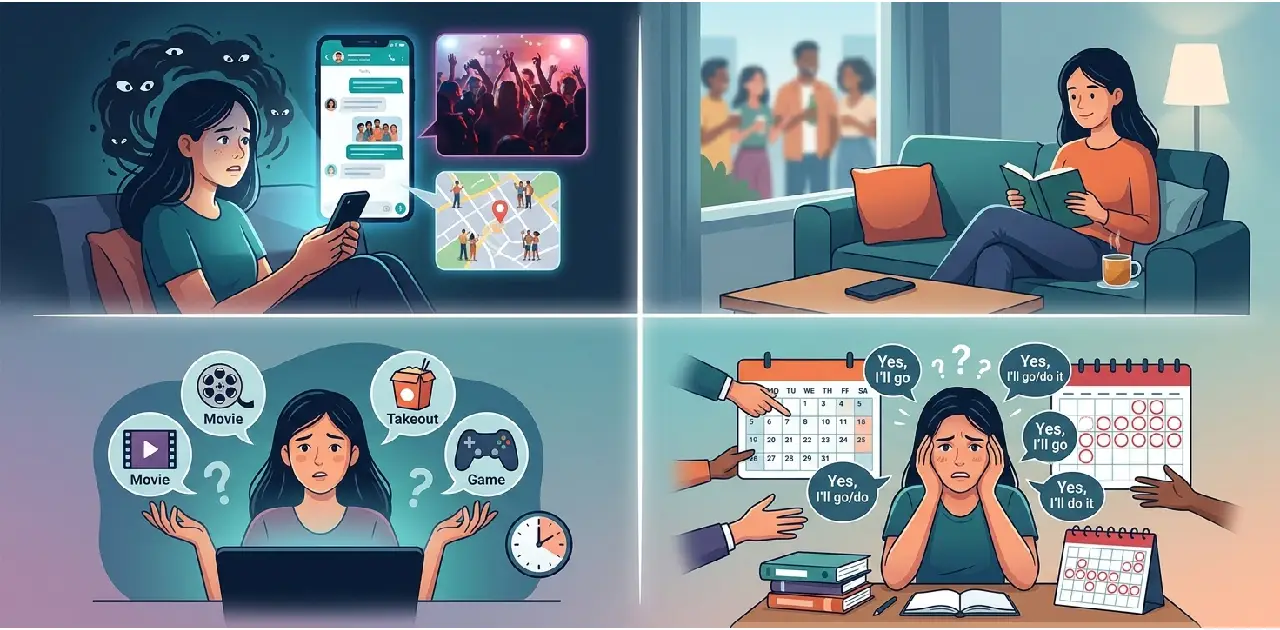
FOMO belongs to a small group of terms that describe modern emotional or lifestyle attitudes, often built the same way, as a short, catchy acronym.
| Term | Meaning | How It Differs From FOMO |
|---|---|---|
| YOLO | You Only Live Once | Encourages taking a risk or seizing an opportunity, rather than describing anxiety |
| JOMO | Joy Of Missing Out | The direct opposite feeling, contentment rather than fear |
| FOBO | Fear Of Better Options | Anxiety about choosing the wrong option when several good options exist |
| ROMO | Reality Of Missing Out | A less common variation acknowledging genuine missed opportunities without the anxious spin |
Understanding these related terms helps explain why FOMO caught on so widely in the first place; it fits neatly into a broader trend of naming specific modern emotional experiences with short, memorable acronyms.
Final Thoughts
FOMO stands for “Fear Of Missing Out,” a term that’s grown from a niche observation at Harvard Business School in 2004 into one of the most universally recognized pieces of modern slang.
It captures something genuinely human: the anxious, comparison-driven feeling that everyone else might be having more fun, more success, or more opportunity than you are right now.
Whether you’re using it lightheartedly in a group chat, recognizing it in an ad trying to rush your decision, or noticing it creeping into your own mood after a scroll through social media, understanding FOMO gives you a little more control over how you respond to it.
And sometimes, like that Friday night I mentioned earlier, the best response really is just texting your friends “next time, I’m there.”
Frequently Asked Questions
What does FOMO mean in a text message?
FOMO stands for “Fear Of Missing Out,” describing the anxious feeling that something exciting is happening elsewhere without you.
Where did the term FOMO originate?
FOMO was coined in 2004 by Patrick J. McGinnis, a Harvard Business School student, and was later added to the Oxford English Dictionary in 2013.
Is FOMO a real psychological experience?
Yes, FOMO is linked to genuine feelings of social comparison and anxiety, and researchers have studied its connection to self-esteem and social media use.
What’s the opposite of FOMO?
JOMO, or “Joy of Missing Out,” describes the contentment of skipping an event or stepping back from social comparison without any accompanying anxiety.
Is it okay to use FOMO in casual conversation?
Yes, FOMO is informal but widely accepted slang, appropriate for texting, social media, and everyday conversation, though not for formal writing.
How do businesses use FOMO in marketing?
Companies often create urgency with phrases like “limited time only” or “selling out fast” to trigger FOMO and encourage quicker purchasing decisions.
How should I respond if a friend says they have FOMO?
A warm, reassuring response usually works best, like inviting them to the next event or offering to share details about what they missed.
Can too much FOMO be harmful?
Yes, frequent or intense FOMO has been linked to increased stress and lower life satisfaction, especially when tied to heavy social media use.
Leave a Reply