

Hmm Meaning in Chat: What It Really Means and How to Respond
You send a message, wait a moment, and get back just one word: “hmm.” No explanation, no emoji, nothing else to go on. Is the person thinking it over? Bored? A little annoyed? That single, quiet reply is exactly why so many people stop mid-conversation to search for what “hmm” actually means.
This guide breaks down everything behind this small but surprisingly complex expression: what it means, where it comes from, and how to figure out the tone behind it so you always know how to respond.
What Does “Hmm” Mean in Chat?

“Hmm” is a written version of the sound people naturally make when they’re thinking, hesitating, or processing something.
In chat and texting, it usually signals that the other person is considering what you said rather than reacting immediately, but depending on the conversation, it can also express doubt, mild interest, confusion, or quiet disapproval.
Unlike an abbreviation such as “lol” or “brb,” “hmm” isn’t short for anything. It doesn’t stand for a phrase; it’s simply a sound turned into text, the same way “um” or “uh” represents hesitation in spoken conversation.
Here’s a simple example:
“I think we should just cancel the trip.” “Hmm, let me think about that.”
In that exchange, “hmm” is doing exactly what a thoughtful pause would do in person, buying a moment before responding with a real answer.
Why “Hmm” Doesn’t Have a Full Form
A lot of people assume “hmm” must stand for something, especially since so many other texting terms are abbreviations.
But “hmm” is different. It’s a non-lexical filler, a sound rather than a word built from other words. The same is true for similar expressions like “um,” “uh,” and “huh.”
Some playful, joke expansions occasionally circulate online, like “Highly Mysterious Mind Moment,” but these aren’t real or widely recognized meanings.
They’re internet humor, not an actual origin. The real explanation is much simpler: “hmm” is just the written form of a natural human sound.
Where Did “Hmm” Come From?
The use of “hmm” to represent thinking or hesitation predates texting by centuries. Long before smartphones existed, writers used “hmm” in novels, plays, and dialogue to show a character pausing thoughtfully or reacting with quiet doubt.
It captured a natural human habit, the small humming sound people make while processing an idea, in a way that readers could instantly understand without extra explanation.
When online chatting, instant messaging, and early SMS texting became widespread in the late 1990s and early 2000s, “hmm” carried over naturally into digital conversation.
It filled the same role it always had, representing a pause or moment of thought, just in a new medium. As texting evolved into social media and messaging apps, “hmm” stuck around because it captures something genuinely useful: a way to signal thinking without committing to a full response yet.
Why “Hmm” Matters So Much in Text-Based Conversations
Face-to-face conversations come with a whole toolkit of cues, tone of voice, facial expression, a raised eyebrow, a pause with a certain kind of silence.
Text strips almost all of that away, leaving only the words themselves. That missing context is exactly why a simple filler word like “hmm” carries so much interpretive weight online.
In spoken conversation, a thinking sound rarely needs decoding; the listener can see and hear enough around it to understand the intent instantly.
In text, that same sound arrives stripped of everything except four letters, which is why so many people find themselves rereading a “hmm” message multiple times, trying to guess what it was really meant to convey.
This gap between spoken and written communication is part of why interest in phrases like “hmm meaning in text” has grown alongside the rise of texting and chat-based communication in general.
The Many Meanings Behind “Hmm”

The tricky part about “hmm” isn’t the word itself; it’s figuring out which meaning applies in a given moment. The same three or four letters can shift dramatically depending on context, tone, and the relationship between the people chatting.
Hmm, as Genuine Thoughtfulness
This is the most common and neutral use. The person is actually considering what was said before responding.
Example:
“I might switch careers next year.” “Hmm, that’s a big decision. What’s making you think about it?”
Hmm, as Doubt or Skepticism
Sometimes “hmm” signals that the person isn’t fully convinced by what they just read.
Example:
“I’m pretty sure ghosts are real.” “Hmm, I don’t know about that.”
Hmm, as Curiosity or Interest
In a lighter context, “hmm” can express intrigue, especially when paired with a playful or teasing tone.
Example:
“I got us tickets to that concert you wanted to see.” “Hmmm, now that’s exciting.”
Hmm, as Mild Annoyance or Disapproval
In a tense conversation, a short, flat “hmm” can signal that the person isn’t happy about something, without directly saying so.
Example:
“I ended up going without you, hope that’s okay.” “Hmm.”
Hmm, as a Stalling Tactic
Sometimes “hmm” simply buys time, especially when someone doesn’t have an immediate answer or is unsure how to respond diplomatically.
Example:
“Do you like my new haircut?” “Hmm… it’s definitely different.”
How Spelling Changes the Tone
One interesting detail about “hmm” is that its length often reflects the intensity of the feeling behind it. A quick “hm” tends to feel more clipped or neutral, while a longer “hmmmm” often signals deeper thought, added suspicion, or playful teasing.
| Spelling | Typical Tone | Spelling | Typical Tone |
|---|---|---|---|
| Hm | Brief, neutral, sometimes slightly dismissive | Hm | Brief, neutral, sometimes slightly dismissive |
| Hmm | Standard thoughtful pause or mild reaction | Hmm | Standard thoughtful pause or mild reaction |
| Hmmm | Slightly more emphasis, often curiosity or suspicion | Hmmm | Slightly more emphasis, often curiosity or suspicion |
| Hmmmm or longer | Playful exaggeration, teasing, or dramatic emphasis | Hmmmm or longer | Playful exaggeration, teasing, or dramatic emphasis |
This pattern isn’t a strict rule, but it’s a genuinely useful clue. Someone drawing out the word tends to put more emotional weight behind it, whether that’s excitement, doubt, or humor.
How to Tell What Someone Means by “Hmm”

Since text conversations don’t carry tone of voice or facial expression, figuring out which version of “hmm” someone means comes down to reading the situation around it.
- What came right before it? A lighthearted question usually gets a lighthearted “hmm.” A tense or serious topic often makes “hmm” feel heavier.
- Punctuation and length. “Hmm.” with a period can feel more final or flat than “hmmm” with extra letters or a follow-up message.
- Whether anything follows. A “hmm” that’s immediately followed by a real answer usually just means “let me think.” A “hmm” left completely alone can feel more ambiguous or even a little cold.
- The person’s usual texting style. Someone who always replies briefly probably isn’t being extra distant. Someone who’s normally detailed suddenly replying with just “hmm” is a bigger signal that something’s on their mind.
- Emojis or lack of them. A “hmm 🤔” reads very differently than a bare “hmm” with nothing else attached.
When it’s genuinely unclear, asking a simple follow-up like “hmm good or hmm bad?” usually clears things up faster than guessing.
How to Respond to “Hmm”
The right reply depends heavily on which version of “hmm” you think you’re dealing with.
| Situation | Suggested Response |
|---|---|
| Thoughtful pause (“hmm, let me think”) | Give them space, then follow up if needed: “Take your time!” |
| Doubt or skepticism (“hmm, I don’t know about that”) | Ask what’s making them unsure: “What part doesn’t add up for you?” |
| Curiosity or interest (“hmmm, that sounds fun”) | Keep the momentum going with more detail |
| Mild annoyance (“hmm.” after tense news) | Check in gently: “You okay? You seem a little quiet” |
| Playful teasing (“hmmmm 👀”) | Respond in kind, this is usually meant lightheartedly |
The goal is to avoid two extremes: ignoring a potential issue behind a flat “hmm” and overreacting to what might just be a genuinely neutral pause.
“Hmm” Across Different Platforms
While “hmm” means the same basic thing everywhere, how it’s typically used can shift a little depending on the platform.
| Platform | Common Usage |
|---|---|
| Texting (SMS/iMessage) | Common in personal conversations, often signaling real thought or hesitation |
| Frequently used in casual back-and-forth chats, similar to texting | |
| Snapchat | Common in quick chats, sometimes flirtatious or playful depending on context |
| Instagram DMs | Used when reacting to content or messages, often paired with curiosity or teasing |
| Dating apps | Can signal curiosity, playfulness, or mild suspicion, tone matters heavily here |
On more personal platforms like texting and WhatsApp, “hmm” tends to carry more emotional weight since these conversations usually happen between people who know each other well. On dating apps, the same word often carries a flirtier or more playful undertone.
“Hmm” in Dating and Relationship Conversations
“Hmm” shows up constantly in dating conversations, and the emotional stakes attached to it tend to run a little higher than in casual friend chats. A single “hmm” from someone you’re interested in can feel very different depending on where things stand.
Early conversations. A playful “hmmm” in response to a flirty message is often a good sign; it usually signals interest or teasing rather than genuine hesitation. In this context, added letters or a following emoji tend to confirm a lighthearted tone.
Waiting on a response to plans. If you’ve asked someone out and get back a flat “hmm,” it can be harder to read.
It might mean they’re genuinely checking their schedule, or it might be a soft way of hesitating without directly saying no. Waiting for a follow-up message before assuming the worst is usually the safer approach.
During a disagreement. In more established relationships, a short “hmm” during a tense conversation often functions similarly to a sigh; it can signal frustration or a reluctance to fully engage with the topic right away.
Giving the other person a little space before pushing further tends to lead to a more productive conversation.
Because “hmm” carries so little inherent information on its own, pairing it with attentiveness to the rest of the conversation, timing, punctuation, and follow-up messages matters even more in dating contexts than in casual friend-to-friend texting.
“Hmm” vs. Similar Filler Words
“Hmm” belongs to a small family of sound-based fillers that all represent some form of hesitation or reaction, but each carries a slightly different tone.
| Term | Typical Meaning | How It Differs From “Hmm” |
|---|---|---|
| Um | Hesitation, uncertainty about what to say | Feels less thoughtful, more unsure or nervous |
| Uh | Hesitation, often mid-sentence | Similar to “um,” but usually shorter and quicker |
| Huh | Confusion or surprise | More abrupt, often signals not understanding something |
| Oh | Realization or reaction | Sharper and more immediate than “hmm” |
| Well | Preparing to explain or soften a response | More conversational, often leads into an actual sentence |
“Hmm” tends to sound softer and more thoughtful than most of these alternatives. “Huh” feels more abrupt, “um” sounds more unsure, but “hmm” carries a sense of quiet consideration, even when it’s masking doubt or mild frustration.
Is It Rude to Reply With Just “Hmm”?
It depends heavily on context. In response to something that genuinely requires thought, like a big decision or a complex question, “hmm” is a completely normal, low-effort way to signal that you’re considering it. It’s not rude at all in that setting.
It can feel dismissive, though, when it’s the only response to something the other person clearly put effort or emotion into. Replying with a bare “hmm” to an apology, a long explanation, or exciting news can come across as cold, even if that’s not the intention behind it.
If you want to use “hmm” without sounding distant, adding just a little more, like “hmm, let me think about that and get back to you,” keeps the same thoughtful tone without leaving the other person guessing.
When to Avoid Using “Hmm” Alone
While “hmm” is fine in most casual digital conversations, a few situations call for a bit more effort.
- After someone shares something emotional or vulnerable. A bare “hmm” can feel dismissive when warmth or reassurance is expected instead.
- In professional messages. “Hmm” is far too casual for work emails or formal written communication.
- When a decision genuinely matters to the other person. If someone is waiting on an important answer, a lone “hmm” can create unnecessary anxiety about what you’re really thinking.
- With people who don’t know your texting style well. Close friends might read your “hmm” correctly based on history, but someone newer to the relationship may not have that context yet.
In these situations, adding just a few extra words turns “hmm” from an ambiguous pause into a clear, considerate response.
Examples of “Hmm” in Real Conversations
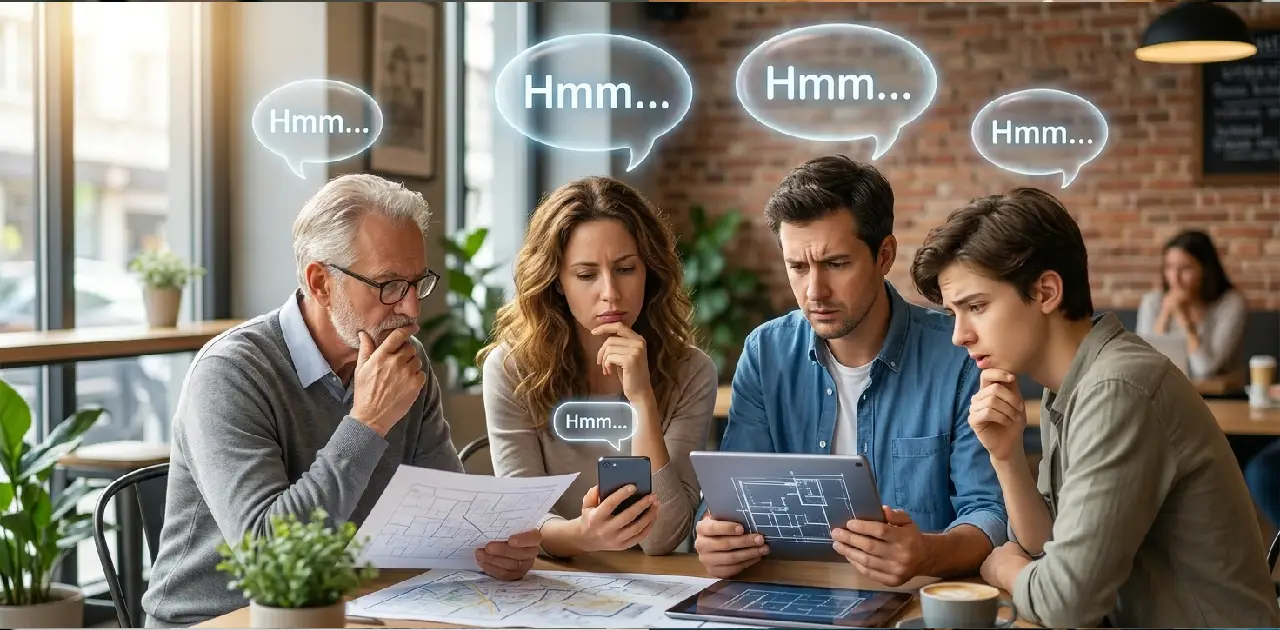
Seeing “hmm” used in a range of situations makes its flexibility easier to understand.
Example 1 – Genuine consideration
“Should we go with the blue one or the gray one?” “Hmm, I’m leaning toward gray, but let me look again.”
Example 2 – Mild skepticism
“This new diet trend is supposed to work in a week.” “Hmm, sounds a little too good to be true.”
Example 3 – Playful curiosity
“Guess what I got you for your birthday.” “Hmmm, now I’m curious.”
Example 4 – Possible annoyance
“I already told my mom we’re coming for dinner without asking you first.” “Hmm.”
Example 5 – Stalling before an honest answer
“Be honest, did you like the movie?” “Hmm… it wasn’t really my thing.”
Final Thoughts
“Hmm” is one of the simplest expressions in texting, but also one of the most flexible. It’s not an abbreviation or acronym; it’s simply the written version of a natural thinking sound, used to signal hesitation, doubt, curiosity, or quiet disapproval depending on the moment.
Its meaning has stayed remarkably consistent for centuries, long before texting even existed, because it captures something genuinely human: the small pause people take before responding.
The next time “hmm” shows up in your messages, take a beat to consider what came before it, how it’s spelled, and what usually comes next. More often than not, that context will tell you exactly what the other person means, no guessing required.
Frequently Asked Questions
What does “hmm” mean in a text message?
Hmm, meaning in chat,t “Hmm” represents a natural thinking sound, usually signaling that someone is considering something, though it can also express doubt, curiosity, or mild annoyance depending on context.
Does “hmm” have a full form or acronym meaning?
. No, “hmm” is not an acronym. It’s a written version of a sound people make when thinking or hesitating, not short for any phrase.
Why does the length of “hmm” seem to matter?
Longer versions like “hmmm” or “hmmmm” often carry more emotional weight, signaling deeper thought, playful teasing, or added suspicion compared to a short “hmm.”
Is it rude to reply to someone with just “hmm”?
It depends on context. It’s fine for questions requiring thought, but it can feel dismissive after something emotional or important has been shared.
What’s the difference between “hmm” and “um”?Hmm,m meaning inchath, “Hmm” usually sounds more thoughtful and composed, while “um” tends to signal more nervousness or uncertainty about what to say.
Can “hmm” be used flirtatiously?
Yes, especially on dating apps or Snapchat, “hmm” can signal curiosity, playfulness, or teasing depending on the conversation’s tone.
How do I know if someone’s “hmm” means they’re upset?
Look at what came before it. If it follows tense or disappointing news, a flat “hmm” without further explanation may signal mild frustration.
Where did the use of “hmm” in writing originate?
It predates texting by centuries, appearing in literature and dialogue long before digital communication, as a way to represent a character’s thoughtful pause.
Leave a Reply